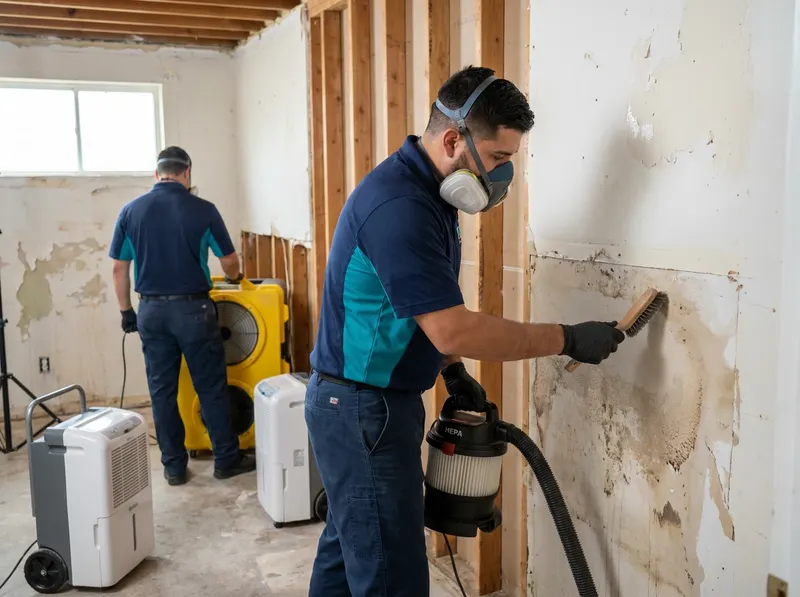
Mold remediation is a distinct step that follows water extraction and structural drying, not a substitute for either. Extraction and drying stop the water; remediation addresses growth that already colonized porous surfaces. In Dallas-Fort Worth, the region's humidity, summer dew points regularly in the 70s °F, lets mold establish quickly on the paper facing of gypsum drywall, the backing of laminate flooring, and fiberglass insulation once those materials stay damp. The EPA's guidance treats any porous material with visible growth over roughly 10 square feet as a job requiring containment rather than surface wiping.
Containment fit depends on the size of the affected area. A closet or under-sink cabinet with a few square feet of surface growth often needs only localized cleaning and a HEPA vacuum. A bathroom wall behind a slow supply-line leak, or a bedroom served by a burst pipe, calls for full containment: 6-mil poly sheeting sealed floor to ceiling, a HEPA air scrubber running negative pressure so spores exit through filtration instead of drifting into the rest of the house, and removal of the wet drywall up to 12 to 24 inches above the visible line. If growth reaches the HVAC returns or the attic decking, common in older Oak Cliff and East Dallas homes with pier-and-beam construction and ducted attics, the scope expands to duct cleaning and decking treatment.
Decision guidance is straightforward: if the drywall is soft, stained, and cannot be dried below 16% moisture content within 48 hours, the affected section is removed rather than dried. If the framing is solid oak or pine 2x4 and only surface-stained, it is sanded, HEPA-vacuumed, and treated with an antimicrobial, then left in place. Slab-foundation homes across Plano, Frisco, and Arlington concentrate moisture damage at the base of walls, so remediation there focuses on the bottom two feet of drywall and the sill plate. Post-remediation verification, a third-party air or surface sample confirming spore counts fall to normal indoor levels, is the step that separates remediation from a simple cleaning, and it is what lets the space be rebuilt with confidence.
A point that prevents a common misunderstanding: mold remediation is not the same as water extraction, and it is not mold 'testing' alone. Testing identifies and quantifies growth; remediation removes it and verifies the removal. Many DFW insurance claims cover sudden water events and the resulting remediation, but not long-term seepage the policy defines as maintenance, so documenting the water source with dated photos matters for the claim.