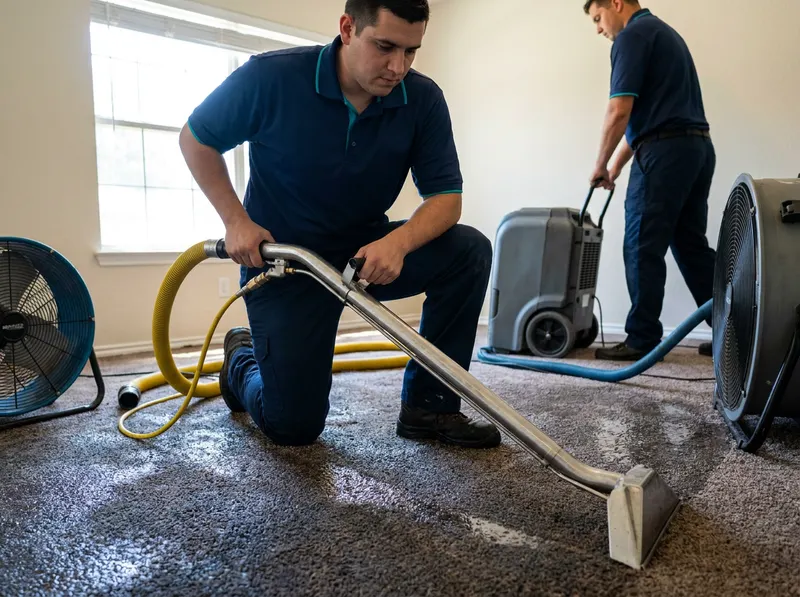
Emergency water extraction is the removal of water only; it is not the same as full drying or reconstruction. A crew arrives, locates the water with a moisture meter, and pulls it out with a truck-mounted unit that stays on the street plus portable submersible pumps for deep pooling. Standing water above roughly two inches is usually cleared with a submersible pump first, then the residual is vacuumed from carpet and hard surfaces. Getting standing water out within the first 24 to 48 hours is what limits secondary damage, because untreated Category 1 clean water can shift toward Category 2 or 3 as it sits and contacts building materials.
Dallas-Fort Worth floods from a few repeat causes. Slab-foundation homes across Plano, Frisco, and McKinney sit on expansive Blackland Prairie clay, so a supply-line break or water-heater failure spreads fast across a single level with no basement to catch it. Older two-story houses in the M Streets and Lakewood near White Rock Lake see upstairs bathroom overflows soak through to the first floor. Flash flooding along the Trinity River corridor and creeks near Las Colinas can push ground water into ground-floor rooms during spring storms. Each pattern changes the extraction plan: a clean supply-line loss is straightforward extraction, while river or sewer water is Category 3 and requires containment and disposal of porous materials.
Decision-fit is about volume and water type. If a single room has an inch or less of clean water on tile, a wet-vacuum extraction of an hour or two clears it. If water has spread across an open-plan floor or soaked into carpet pad, truck-mount extraction moves far more gallons per hour and is the practical choice. If the water is gray or black, extraction shifts to contaminated-water protocol and saturated carpet, pad, and drywall are removed rather than saved. The trade-off is speed versus salvage: pad and drywall pulled early dry the structure faster, while trying to save them adds days of dehumidification.
The sequence is short and predictable. First, the crew shuts off the water source or confirms it is off. Second, they meter the affected area to map how far the water traveled, which is often two to three feet beyond the visible wet line. Third, submersible pumps clear any standing pool, then truck-mount and portable extractors pull water from flooring and carpet. Fourth, they document moisture readings for the file and hand off to the drying stage, which uses air movers and dehumidifiers over the following days. Extraction is billed separately from that drying stage so the water can start coming out before a full drying scope is written.